
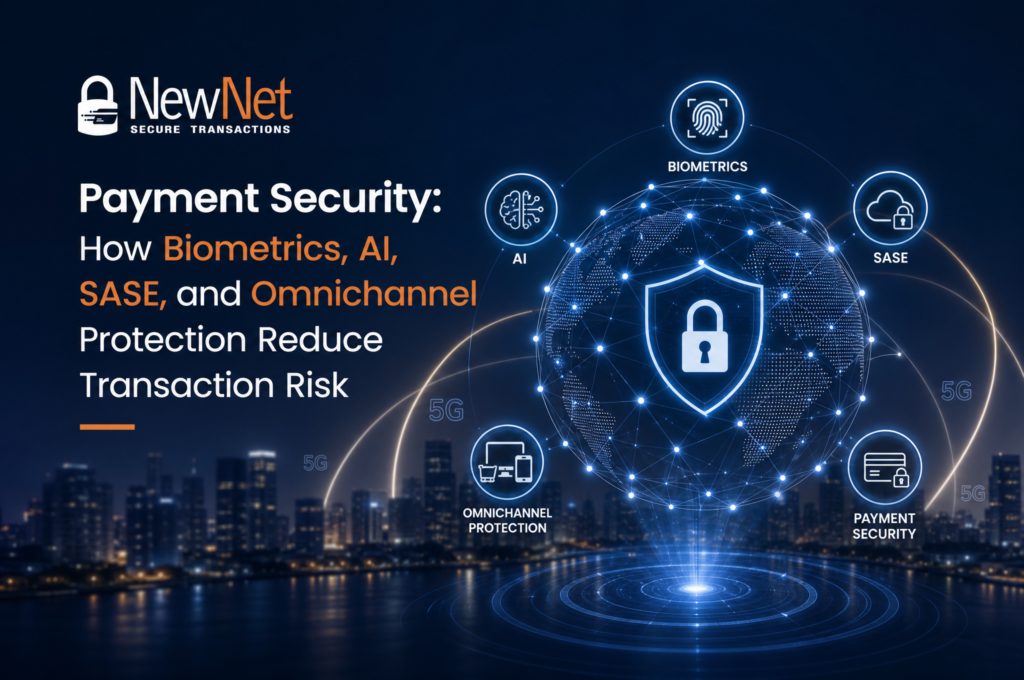
Payment Security is no longer just about processing a card payment safely. Every transaction carries some level of risk, which means trust has to be built into the payment infrastructure itself. Modern payment security depends on strong identity verification, secure connectivity, fraud prevention, and consistent protection across every payment channel. For businesses handling digital or in-person commerce, the goal is simple: reduce fraud, protect customer data, and make transactions trustworthy without adding unnecessary friction. The strongest payment security strategies now combine biometrics, AI-driven fraud defense, fintech-grade SASE, and omnichannel support. What Is Payment Security? Payment Security refers to the systems, controls, and technologies used to protect payment transactions from fraud, identity abuse, interception, and unauthorized access. It applies to the full payment journey, not just the moment a payment is approved. That includes: Verifying identity before a transaction is completed Securing data movement across networks, cloud systems, and edge environments Detecting and stopping fraud in real time Protecting all payment channels with consistent controls In other words, payment security is not a single feature. It is an integrated framework for creating trust in commerce. Why Payment Security Matters More Than Ever Every payment transaction creates exposure. A weak point in identity verification, network connectivity, or fraud monitoring can undermine the entire process. Businesses cannot assume trust simply because a transaction reaches the payment stage. Strong Payment Security matters because it helps organizations: Reduce fraud attempts and successful fraud Confirm that the person initiating payment is who they claim to be Protect transactions moving across cloud, edge, and distributed environments Support secure commerce across multiple channels Build customer confidence in the payment experience As payment ecosystems expand, trust needs to be engineered into the infrastructure, not added later as an afterthought. The Core Building Blocks of Modern Payment Security 1. Biometric Identity Verification One of the biggest challenges in payment security is confirming identity quickly and accurately. Biometric facial recognition is designed to verify identity in an instant, which can strengthen trust at the point of transaction. Used properly, biometrics can improve Payment Security by: Reducing reliance on weaker identity signals Adding a stronger layer of user verification Helping prevent unauthorized payment activity Supporting faster and more seamless transaction flows For organizations that want lower friction without sacrificing protection, biometric verification can be a practical way to align convenience with stronger security controls. 2. AI for Fraud Prevention and Prediction Traditional fraud systems often focus on reacting to known threats. Modern Payment Security increasingly depends on AI that can do more than detect suspicious activity after the fact. AI-based protection can help by: Identifying patterns linked to fraudulent behavior Flagging risk during the transaction lifecycle Improving decision-making speed Supporting predictive fraud defense rather than only reactive blocking When AI is used with agentic intelligence, the emphasis shifts from simply fighting fraud to anticipating it. That proactive approach is especially valuable in fast-moving payment environments where waiting to respond can be too late. 3. Fintech-Grade SASE for Secure Connectivity Payment transactions do not move through a single isolated environment. They often travel across cloud systems, edge infrastructure, and multiple operational channels. That makes secure connectivity a central part of Payment Security. Fintech-grade SASE, or Secure Access Service Edge, helps protect those transaction paths by creating a more secure connectivity layer around payment activity. This matters because it can help ensure that: Transactions remain protected as they move across distributed environments Security is applied consistently across cloud and edge systems Connectivity becomes a security asset rather than a weak point Payment operations are supported by infrastructure built for trust For many payment ecosystems, network and infrastructure security are just as important as front-end fraud controls. 4. Omnichannel Protection Customers and businesses increasingly operate across many payment channels. A secure experience in one channel is not enough if another channel remains exposed. Payment Security in an omnichannel environment means applying protection across the full commerce experience, including every place where a payment can be initiated, processed, or authenticated. Omnichannel payment security helps businesses: Maintain consistent trust across channels Avoid fragmented security policies Reduce gaps attackers may exploit Support flexible commerce without weakening defenses This is especially important for organizations that want freedom in how they deliver payments while keeping security standards high. How These Technologies Work Together The most effective Payment Security is layered. No single control solves every problem. Real trust comes from combining identity, intelligence, connectivity, and cross-channel coverage. A modern payment security stack may work like this: Biometrics verify identity at the moment of interaction. AI evaluates transaction behavior and looks for signs of fraud risk. SASE secures the transaction path across cloud, edge, and network environments. Omnichannel controls maintain protection no matter where the payment occurs. This layered model helps organizations move beyond basic payment processing toward a broader trust architecture. What Strong Payment Security Looks Like in Practice Businesses evaluating their current approach can use a simple checklist to assess whether their payment security model is modern enough for current risks. Effective Payment Security usually includes: Identity assurance with technologies such as biometric verification Fraud intelligence that detects and predicts suspicious behavior Secure infrastructure protecting transactions across cloud and edge environments Consistent omnichannel protection across all payment touchpoints Integrated design where trust is built into the platform itself If one of these areas is missing, the payment environment may still have avoidable weaknesses. Common Payment Security Mistakes Many organizations think about payment security too narrowly. That can lead to gaps even when some protections are already in place. Common mistakes include: Treating payment security as only payment processing security A transaction can be approved and still be risky if identity, infrastructure, or fraud controls are weak. Relying on reactive fraud defense only Blocking known threats is useful, but predictive intelligence offers stronger protection. Ignoring connectivity risk Payment data moving across cloud and edge systems needs secure transport and policy enforcement. Using inconsistent rules across channels Omnichannel freedom without omnichannel security creates exploitable gaps. Assuming trust instead of engineering it Trust has to be built into the full infrastructure supporting commerce. Who Benefits Most From Advanced Payment Security? Advanced Payment Security is especially relevant for organizations that process transactions across digital, distributed, or multi-channel environments. This includes businesses that need to: Protect high volumes of payment activity Reduce fraud exposure without adding excessive friction Support secure commerce across cloud and edge infrastructure Strengthen identity verification at the point of payment Unify protection across multiple payment channels In these environments, layered payment security is not optional. It is part of the foundation of trusted commerce. How to Evaluate a Payment Security Platform When comparing platforms or infrastructure approaches, look beyond basic transaction handling. Ask these questions: Does the platform support biometric identity verification? Does it use AI to predict and fight fraud? Does it secure transactions across cloud, edge, and every channel? Is Payment Security built into the architecture, or added on later? Can it support omnichannel flexibility without reducing trust? These questions help separate basic processors from platforms designed to engineer trust at the infrastructure level. Frequently Asked Questions About Payment Security Is payment security only about fraud prevention? No. Fraud prevention is one part of Payment Security, but it also includes identity verification, secure connectivity, and protection across all payment channels. Why are biometrics important in payment security? Biometrics can provide fast, stronger identity verification, which helps reduce the risk of unauthorized transactions and supports a smoother payment experience. How does AI improve payment security? AI can identify suspicious patterns, react faster to risk, and support predictive fraud defense. That means it can help stop fraudulent activity before damage occurs. What role does SASE play in payment security? SASE helps secure the connectivity layer for transactions across cloud, edge, and distributed environments. This is important when payment systems operate beyond a single network perimeter. What does omnichannel payment security mean? It means applying consistent security controls across every payment channel so trust does not break down when customers or businesses move between channels. The Future of Payment Security The direction of Payment Security is clear. Trust is moving from assumption to design. Businesses need payment systems that combine fast identity verification, predictive fraud protection, secure transaction routing, and omnichannel resilience. That shift changes how organizations should think about payments. Secure payment infrastructure is no longer just a back-end utility. It is a strategic trust layer for commerce. Key Takeaway Payment Security works best when it is engineered as a complete system. Biometrics help verify identity, AI strengthens fraud defense, SASE protects the transaction path, and omnichannel coverage keeps trust consistent everywhere payments happen. For any business handling modern commerce, the strongest approach is not simply processing payments securely. It is building trust into every transaction from the ground up.

Payment Security

Payment Security: How Biometrics, AI, SASE, and Omnichannel Protection Reduce Transaction Risk

Payment Security is no longer just about processing a card payment safely. Every transaction carries some level of risk, which